After two decades of discussion and false starts, Eurovision is preparing to take its song competition to a new audience. Eurovision Asia’s first grand final is set for Saturday in Bangkok, with 11 countries taking part and a familiar mix of public and jury votes deciding the winner.
The show, scheduled to start at 20:30 ICT (13:30 GMT), comes as Eurovision celebrates its 70th birthday. For the European Broadcasting Union, it is a chance to introduce a television formula long established in Europe to audiences across Asia.
Thai singer and Eurovision enthusiast Sarun “Note” Kungbunpot believes that will take time. “It’s still very new in Asia. I’m not sure many people have heard about it yet,” he says.
He sees a difference between Eurovision and contests in Thailand, the Philippines and Korea, where he says the focus is on the singer and fans look for their idols. “But Eurovision is all about the song, not the singer. I think this needs to be communicated clearly.”
Eurovision began in 1956 as a project to encourage cultural exchange in a Europe seeking a common future after two world wars. It grew alongside mass television ownership and became part of Europe’s shared cultural heritage. In Asia, it arrives without that history and at a time when traditional television formats are competing for attention in the digital age.
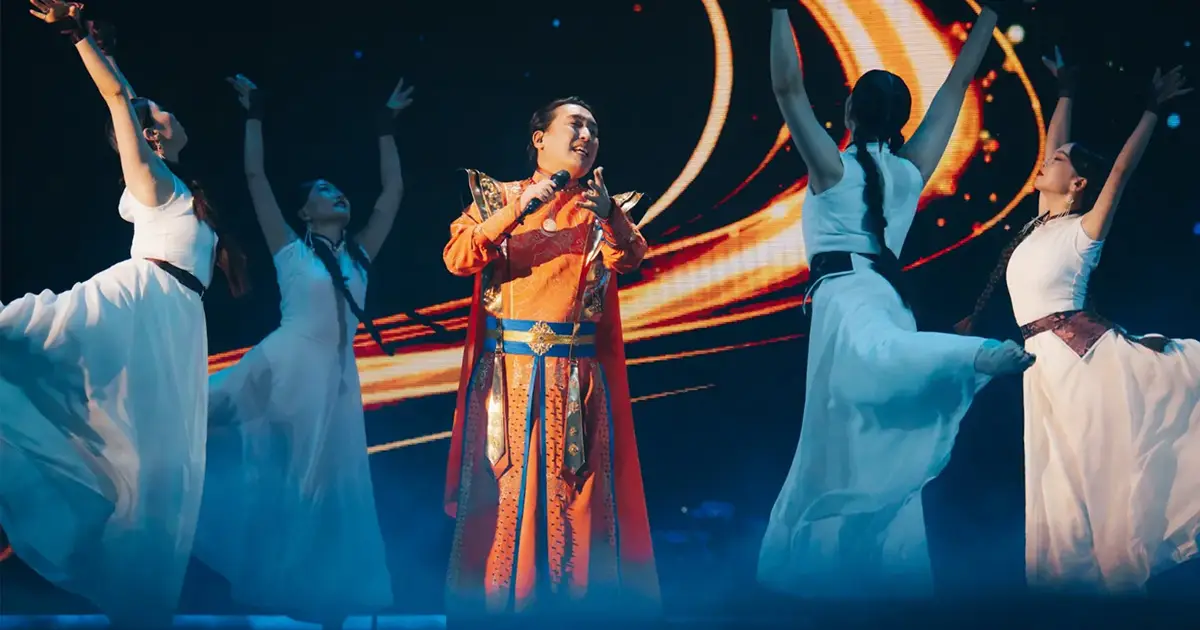
Host Thailand will be joined by Malaysia, the Philippines, Vietnam, Cambodia, Laos, South Korea, Mongolia, Bangladesh, Nepal and Bhutan. India, China, Japan and Indonesia are absent, although negotiations are under way to bring them into a contest next year, if one is held.
The run-up to the Bangkok final has also brought organisational difficulties. A sudden $1 million (£760,000) budget cut three weeks before the final meant many technicians familiar with staging Eurovision were not brought to Thailand. There have been staff resignations, while Eurovision followers have criticised the audio and lighting in rehearsal videos.
The voting system may itself be new to many in the audience. As in Europe, the result will be determined by an equal mix of public voting and national juries. The public vote covers the 11 competing countries and a 12th “rest of the world” category.
Anyone can vote after registering and receives eight votes, but voters cannot choose their own country’s contestant and must distribute their votes among at least three others. Public and jury votes are converted into points: the most popular song in a country receives 12, while the last-ranked song gets zero, or the famous “nul points”.
In Europe, there have long been reports of coordinated voting between neighbours. That may be less likely in the Asian contest, although political differences could influence audiences’ choices, including those in Thailand and Cambodia after their border war last year.
The Philippines’ overseas population could also play a part. Most of the 11 million Filipinos living abroad are in countries that are not competing, however, so their votes will be counted in the rest-of-the-world pool.
For Bhutan, a country with fewer than a million people, the contest offers a rare global platform. Its representative, 24-year-old Thukten Nyendra, is performing Lhayi Semo (The Angel) in Bangkok. Before the trip, he had never left Bhutan or travelled on a plane.
“I’m not a star. I’m just Nyendra over there,” he said. “Nobody knows me. But Eurovision has given me a huge platform. Actually winning would mean the world to us... If I really make it through all of this, it would mean the entire freaking world to us.”
Eurovision has helped bring relatively unknown performers to international audiences before: Abba were little known when they won with Waterloo in 1974, and Celine Dion won in Ireland in 1988. Because awareness of Eurovision Asia is limited, however, many of this year’s finalists are already established names at home.
Among them is Malaysian singer Aina Abdul, known for her vocal range and dramatic costumes. Her entry, Bluest Sky, was inspired by her late cat Hiro, she said, and is considered a strong contender for the first Eurovision Asia title.